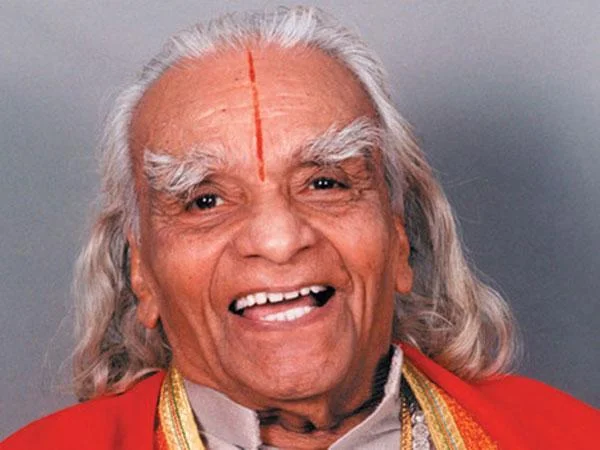


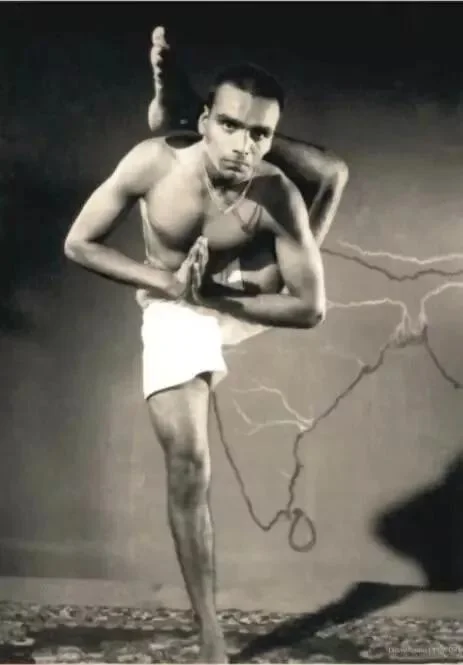
In 1937, when he was just eighteen years old, Krishnamacharya sent him to Pune to teach yoga. The young Iyengar spoke only a little English and even less Marathi, the language spoken by his new students. He had limited knowledge, almost no money, and no guarantee that he would succeed as a teacher. He arrived alone in the city that would later become his lifelong home.
At that time, he was not yet Guruji, the author of groundbreaking books, or the teacher to whom students would travel from all over the world. He was an eighteen-year-old young man who, even as he taught others, still had much to learn himself. It was during this period that his distinctive approach began to take shape: practice, observation, correction, and practice again. Every class he taught was also an opportunity for his own exploration. From this continuous process gradually emerged an approach that would later profoundly influence the teaching and understanding of yoga around the world.
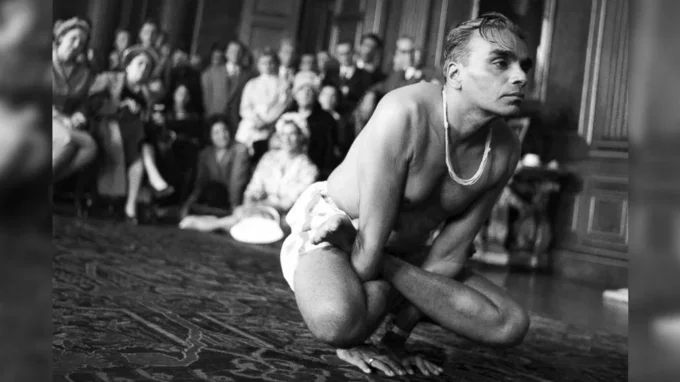
Pune: years of hardship, practice, and independent exploration
Arriving in Pune did not mean that B. K. S. Iyengar became a recognised teacher overnight. It marked the beginning of another period of uncertainty. He was very young, had limited knowledge of his students’ language, and had not received years of systematic training. But he possessed something that would prove decisive for his future: an extraordinary determination to work.
He began teaching at Deccan Gymkhana, as well as in schools, colleges, and other institutions. He often had to demonstrate poses that he himself was still exploring. To answer his students’ questions, he had to practise with even greater precision. Every class revealed something he did not yet understand, and every uncertainty brought him back to the yoga mat.
His days were long. He taught, travelled from one place to another, and practised for hours each day. He lived in poverty and sometimes barely had enough money for the most basic food. During the hardest periods, rice and tea were almost all he could afford. Hunger, exhaustion, and uncertainty did not stop his practice.
His position as a teacher was not assured either. Yoga in India at that time did not yet enjoy the recognition it has today. The young Iyengar found himself teaching students who were often older, better educated, stronger, and more confident than he was. Some even mocked his slight build. Rather than allowing this to stop him, he accepted the challenge. He knew that he would have to prove his knowledge above all through practice and direct experience.
His initial contract with Deccan Gymkhana was for six months and was later extended as he progressed and interest in his teaching grew. When this period came to an end, Iyengar continued as an independent teacher. At first, he had only a few students, but he persevered. He taught wherever doors opened to him, practised for hours, and gradually built a body of knowledge based not only on what his teacher had told him, but above all on what he discovered for himself through his own body.
Ramamani and life beyond the mat
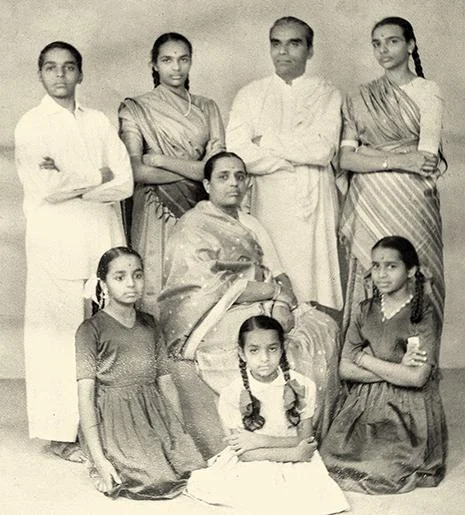
In 1943, B. K. S. Iyengar married Ramamani. Their marriage was arranged by their families, as was customary in India at the time, but a deep bond developed between them. Together they had six children, five daughters and one son.
Ramamani knew little about yoga when they married, but she soon came to understand her husband’s complete dedication to practice and teaching. During the years when his income was far from secure and much of his time was devoted to exploring yoga, she cared for the family and gave him the space and time he needed for his work. She was not simply a quiet source of support in the background. Over time, she also became an attentive observer of his practice and one of the most important companions in his life. Iyengar later spoke of their relationship with great warmth, writing that they lived without conflict, as though their two souls were one.
Family life did not interrupt his practice. On the contrary, it became part of his understanding of yoga. Iyengar did not live as a renunciate, removed from everyday responsibilities. He was a husband, a father, a teacher, and a man who had to earn a living. His path showed that yoga is not only for those who withdraw from the world. It can be part of work, relationships, care, responsibilities, and all the unpredictability of everyday life.
For him, yoga was not an escape from life. It was becoming a way to live life with greater awareness.
More time in the pose, more opportunity to observe
Without support, a student in a demanding asana may be concerned mainly with how to remain in the pose at all. The breath becomes shorter, the face tense, and attention is directed primarily towards the effort and the desire to come out of the pose as quickly as possible. There is little space left to observe what is actually happening in the body.
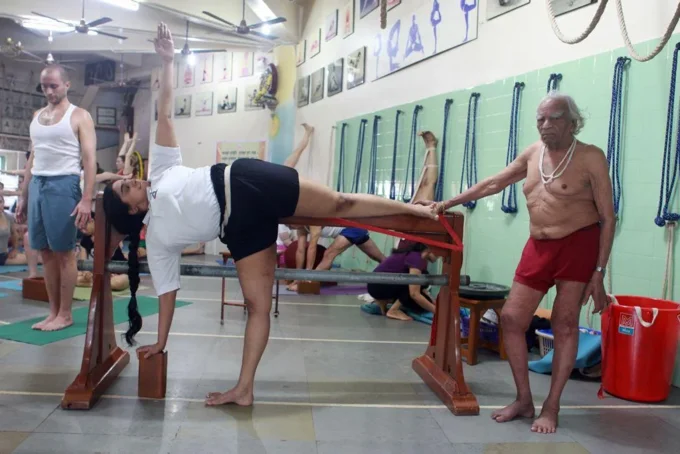
When a prop takes some of the load, attention can shift elsewhere. The student begins to notice where the body is creating unnecessary tension, how the ribs are moving, where direction is being lost, and whether calmness and clarity can be maintained even during effort.
For Iyengar, remaining in a pose for longer was therefore not a test of endurance. He used time as a tool for perception. Not every aspect of an asana can be recognised within a few seconds. The body needs time for the initial resistance to diminish, the breath to become freer, and attention to become more precise.
Props provided exactly this time. The student did not simply enter the pose, but could remain there long enough to begin noticing its details and better understand the responses of the body.
Yoga accessible to different bodies
The use of props also made the practice accessible to people who could not perform certain asanas without support. A physical limitation did not necessarily mean that a pose was inaccessible. It meant that a different way of working might be needed.
Iyengar taught people of different ages and physical abilities. He worked with children, older people, pregnant women, athletes, and people with various injuries, illnesses, and limitations in movement. In this work, adaptations and props became particularly important.
He did not expect everyone to perform the same poses in the same way. For him, adapting an asana did not mean abandoning its purpose. On the contrary, it required an understanding of what the asana is intended to achieve and how an individual student can experience its action.
If a student could not stand, it was necessary to explore which elements of a standing pose could be experienced in another way. If they could not enter an inversion independently, support had to be found that allowed them to practise it more safely. If fear restricted movement, stability and confidence first had to be established.
Instead of asking “Can I do this pose?”, the more important question became: “How can I understand and experience the action of this asana in my own body?”
Through Iyengar’s approach to adapting asanas and using props, yoga became more accessible to people who could not practise many poses without appropriate support.