


Winter is a season of slowing down and turning inward.
With shorter days and less natural light, the body naturally shifts its focus inward. Many traditional health systems, including Eastern medicine, seasonal holistic approaches, and naturopathic traditions, associate winter with the kidneys, seen as the center of deep vital energy, stability, and the capacity for renewal.
Reduced daylight also influences our internal rhythm. During this time of year, the nervous system finds balance more easily when we allow quieter evenings and an earlier bedtime. Winter sleep is not simply rest; it is the foundation for preserving energy that will support us through the more active seasons ahead.
Many people notice that their sleep changes in winter. It may feel lighter, more fragmented, or less refreshing, even when fatigue is present. These signs are not something to dismiss. They often indicate that the body is asking for more support, warmth, and a greater sense of safety.
From a holistic perspective, winter does not call for pushing harder, but for conserving energy. When the kidneys and nervous system are strained by stress, overstimulation, irregular rhythms, or unhelpful evening habits, deep relaxation becomes more difficult. As a result, sleep loses depth and the body’s capacity for regeneration is reduced.
Learning how to sleep better in winter begins with understanding the nature of the season itself.

Why sleep is often poorer in winter
In winter, subtle but meaningful changes take place in the body. It is not only about cold weather or shorter days, but about the adjustment of the entire internal system, including biological rhythms, the nervous system, and energy reserves. These changes are natural, yet they are often overlooked by the modern lifestyle.
Shorter days and the circadian rhythm
Less daylight directly affects the circadian rhythm. The body begins to release melatonin, the hormone that prepares us for sleep, earlier in the day. When we do not follow this signal and remain active late into the evening, the rhythm becomes disrupted. The result can be difficulty falling asleep, night-time awakenings, or the sense that sleep is not deep enough.
In winter, the body does not need more discipline, but more listening.
The kidneys as an energy reservoir
In traditional health systems, the kidneys are associated with deep vital energy, which supports resilience, stability, and the capacity to regenerate. Winter is the season when this energy is not replenished through activity, but through rest.
Chronic stress, mental overload, irregular rhythms, and lack of sleep gradually deplete this reservoir. This often shows up as inner restlessness, anxiety, exhaustion, or shallow sleep.
The nervous system needs more support in winter
Less light, more time indoors, and reduced natural movement affect the balance of the nervous system. If we do not create a clear transition from day to night, the body remains in a state of alertness.
Sleep is not a simple switch-off, but a process that requires a sense of safety.

Food, fats, and drinks for better sleep in winter
In winter, the body seeks warmth, stability, and nourishment. Evening meals at this time of year are not about indulgence or compensating for a demanding day, but about creating the conditions in which the body can slow down and prepare for rest. What we eat in the evening directly affects sleep quality, the depth of regeneration, and our sense of inner calm.
Evening meals
During winter, the body is best supported by warm, simple, and easily digestible foods that do not burden digestion or overstimulate the nervous system. Particularly suitable are:
- soups, stews, and porridges,
- root vegetables,
- whole grains in small portions.
In the evening, it is wise to avoid cold or raw foods, excess sugar, alcohol, and heavy meals close to bedtime, as these often lead to restless or interrupted sleep.
Healthy fats as support for the nervous system
Fats play a special role in winter. They support the nervous system, hormonal balance, and a sense of grounding. They are best included regularly, in small amounts, and always cold:
- flaxseed oil,
- hemp oil,
- high-quality omega-3 fats.
These fats are not stimulating. Instead, they help the body maintain stability and softness, both essential for deep, restorative sleep.
Evening drinks
A warm drink in the evening acts as a simple yet powerful signal to the body that the day is coming to an end. It is not only about hydration, but about a sense of ritual and calming down.
In winter, the following often work well:
- chamomile,
- valerian,
- gentle cocoa made with plant-based milk,
- warm milk with mild spices.

Restorative Iyengar yoga for better sleep in winter
When nutrition, daily rhythm, and evening settling are in place, the body is more receptive to quiet, supported movement. Restorative Iyengar yoga is not about effort, but about creating the conditions for deep relaxation.
The key to the practice is complete support.
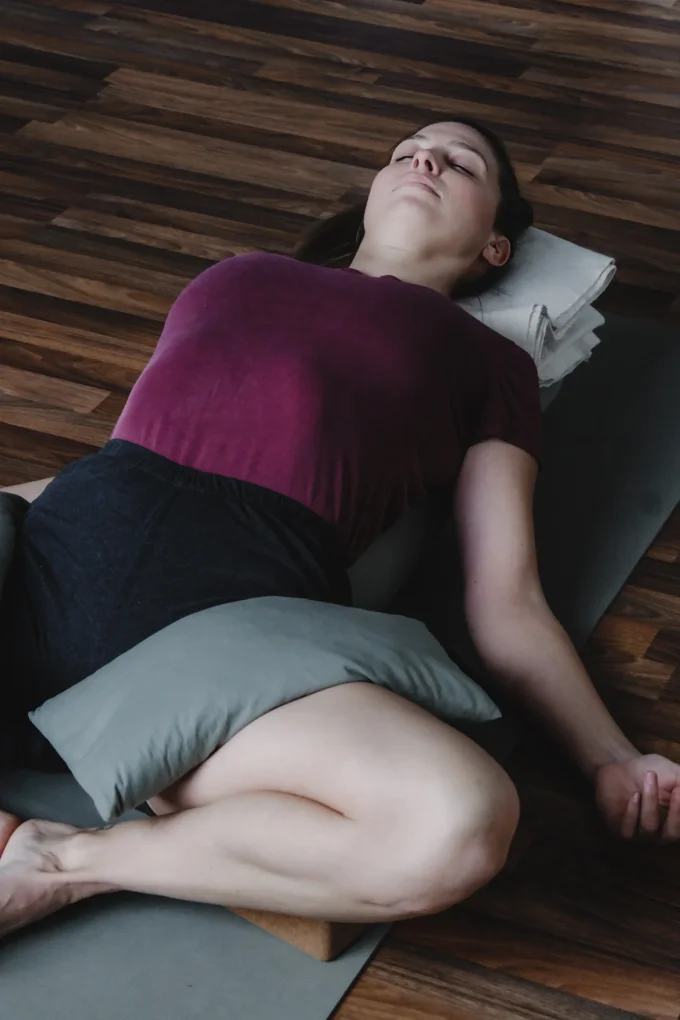
Supta Baddha Konasana
A pose that calms the nervous system, softens the abdomen, and supports the kidneys.
Helpful for restlessness and difficulty falling asleep.
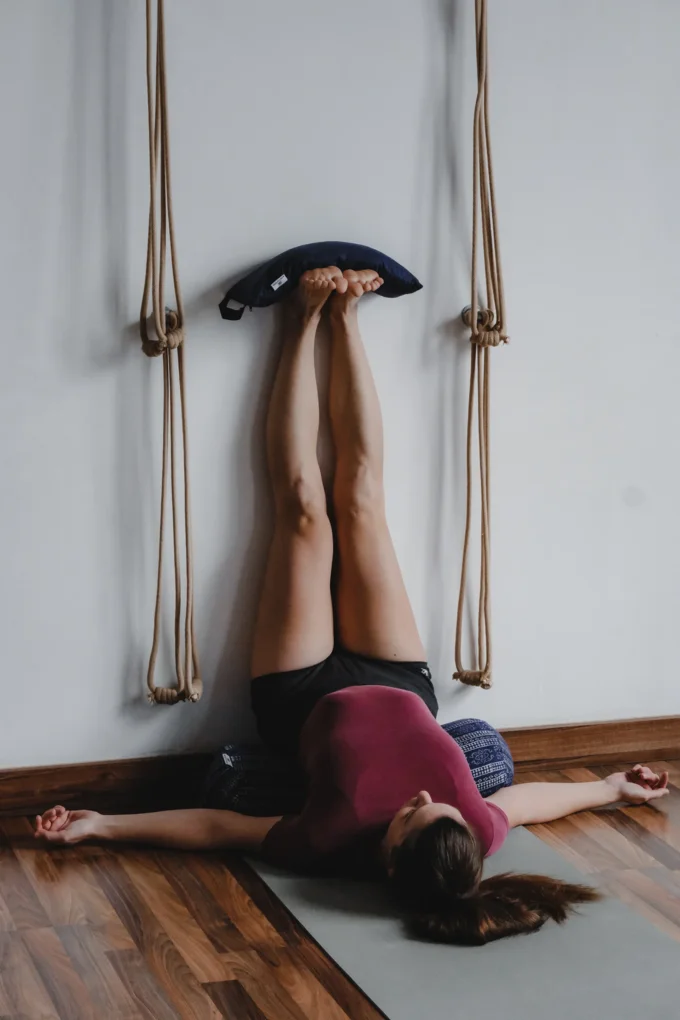
Viparita Karani
A deeply grounding pose to end the day. Supports fatigue and frequent night-time awakenings.
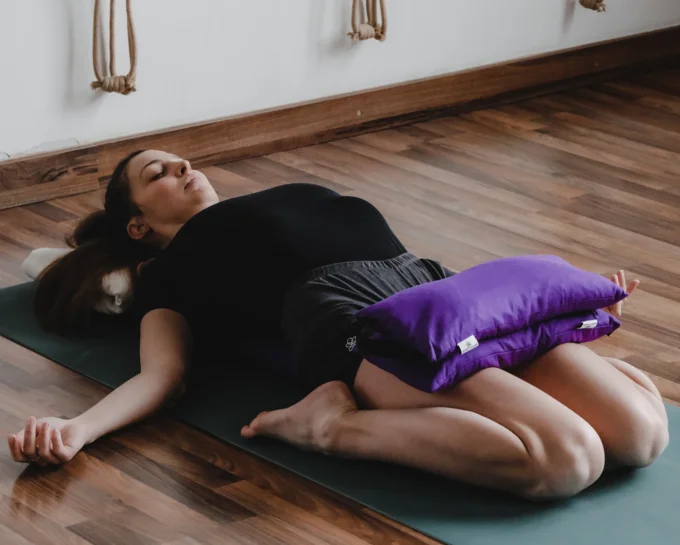
Supta Virasana
A deep yet quiet pose that opens the front of the body and supports breathing. Proper support is essential.
A short evening protocol (15–20 minutes)
- Dim the space.
- Choose one or two poses.
- Use plenty of support.
- Stay for 8–12 minutes.
- End in silence.
If you feel ready to sleep after the practice, this is a good sign.
Sleep as a continuation of practice
In winter, good sleep is an act of self-care. When rhythm, nourishment, warmth, support, and restorative practice come together, sleep becomes deeper, more stable, and genuinely renewing.
Gentle Weight as Support for Deep Rest
In winter, the body often relaxes more easily when it feels a clear sense of support and grounding. Gentle, evenly distributed pressure helps the nervous system perceive boundaries and settle. This is why sandbag weights are commonly used in evening routines and restorative yoga, placed over the lower abdomen, thighs, or feet.
This kind of support is simple yet highly effective. The weight of sandbags:
- calms the nervous system,
- reduces inner restlessness,
- deepens the sense of stability,
- signals to the body that it is safe to let go.
Sandbag weights are not used to create effort, but to cultivate a sense of safety and stillness. Combined with warmth, quiet breathing, and an unhurried evening routine, they can become an important part of preparing for deeper, more stable, and truly restorative sleep.